My notes
2519 words · ~13 min readFinally finished this book just in time for the update on National Day Rally.
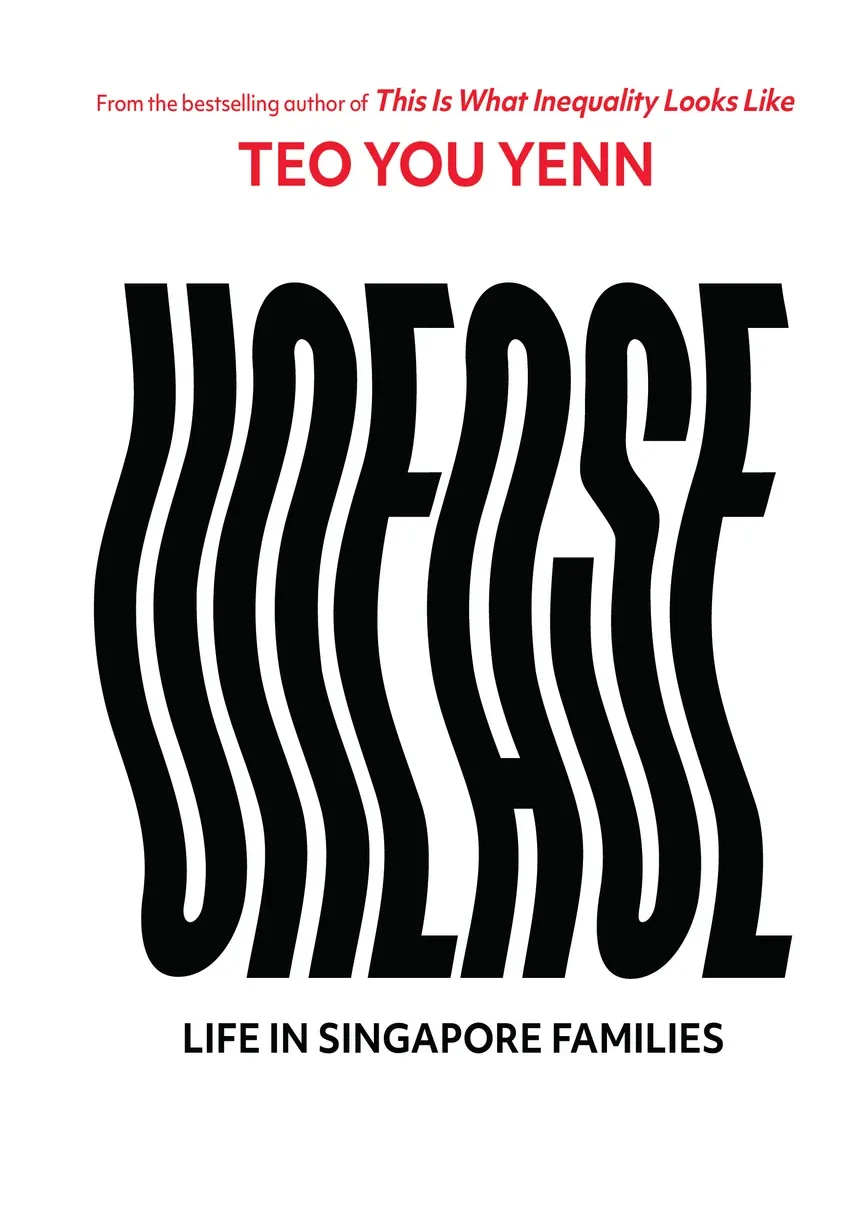
This book explores (and maybe implores readers who may be citizens of Singapore or just readers living in Singapore to think about), the disconnect between Singapore’s official "pro-family" state narrative and the stressful, high-pressure reality of day-to-day parenting. Let me summaries by each chapters and provide my thoughts about them.
Chapter 1: A World-Class City, A Paradox of Unease
Singapore markets itself as a safe, prosperous, pro-family environment, yet parents experience persistent feelings of exhaustion, insecurity, and friction.
For example, from an “outside in” perspective, one might look at Singapore as a world class city, where infrastructure is built and are in place for everyone to get by enough such that they do not have to worry about their basic needs and can focus on thriving. This perspective or “image” can be shaped by our high GDP, low crime rate, frequent state subsidies… I mean they all sound like tasty carrots. When in actual fact, there is a divorce between reality and the ideal rhetoric. If you ask many people presently about their lives in Singapore, many would share that they do not feel relaxed or secure. Instead, they describe feeling chronically exhausted, anxious, and off-kilter.
This unease is not a personal failing but an expected outcome of the structural environment. Society often tells anxious parents: "You need better work-life balance," "Stop being so kiasu," or "Take a break." But one should argue that parents aren't anxious because they have bad attitudes. They are anxious because the system rewards extreme hyper-vigilance and heavily penalizes slipping up.
Chapter 2: Doing Family: The Texture of Unease
When TYY used the term “doing family” here, she’s trying to emphasize that a family is not just a static structure (parents + children), but a continuous, active process created through daily labor.
In this chapter, she shed a light on the state’s positioning of the nuclear family as the primary safety net for economic survival and care. This offloads massive structural responsibilities onto households, turning family life into an intense management operation.
The famous saying that every Singaporean knows by heart: “No one owes you a living”, and in this sense, not even the government. And that state support is structured to be minimal or conditional, such that you have to go through so much hoops and hurdles and only after the state has decided that you do not have a support system in place, then maybe they might offload you first to NGOs and such organizations before even stepping in to provide support.
In a way, this kinda shapes parents lives as an unending series of administrative tasks, having to navigate and juggle basic everyday needs like eldercare, preschool arrangements, and work commitments. She shows how families constantly feel forced to sacrifice personal well-being, leisure, and sleep just to maintain baseline stability.
The author highlights quotes where parents frame their continuous self-sacrifice as normal, showing how the "pro-family" label masks the heavy burden of individual self-reliance.
Some internal thoughts: how much must you really want kids to go through all these struggle? And I do hear from many of my friends at present, and I’m sure this is common among young adults around the same stage of life. That once you have kids, your lives stops. Careers of mothers to “be put on hold”, vacations to be more family friendly, or even a pause on the thought of a vacation even, more unending household chores, then maybe you’ll also be caught with your ageing parents that you have to care for. The orientation toward the future is not driven by optimism, but by fear.
The constant exhaustion parents feel isn't due to poor time management. It is the inevitable result of a system that offloads the heavy lifting of social welfare onto individual households, leaving parents to manage systemic burdens entirely on their own.
Chapter 3: Inside Families: The Making of Kiasu Parents
I thought this chapter kinda encapsulates what it is to be Singaporean really well. It is hilarious in a sense that I see it all around me, and I’ve always asked myself why are Singaporeans the way that we are? This chapter helps provide a perspective on the shaping of Singaporean’s behaviour.
Hyper-competitive parenting (often labeled ‘kiasu’ or fear of losing out) is not an irrational cultural flaw. Popular discourse often blames parents for the intense pressures of the education system, dismissing their behavior as an irrational cultural obsession with winning.
But if we do not win, we lose. And it is indeed a zero sum game here in Singapore. The “losers” form the base of the social hierarchy and only the elite few gets to make decisions for the state. And then your lives will be continually be dictated by them. Unless you leave. This kinda repeats the system the Rome “used” back in the day.
Might this be too reductive in thinking? Maybe. But in Singapore, there really isn’t much room to “fail” as the structure or narrative is sort of written in stone for you just as soon as you exit your mother’s womb. Or maybe I’m being too reductive. Please criticize me and provide your opinions. Would love to hear them.
The whole kiasu behaviour is ultimately a rational, calculated response to high-stakes institutional systems like national streaming and meritocratic sorting.
Through interviews with middle-class parents, TYY shows how early the pressure starts. Parents describe feeling compelled to enrol young children in tuition, enrichment classes, and specialized preparation, even when they personally dislike doing so. They do this because the education system clearly rewards early tracking and severely penalizes late bloomers. The author demonstrates that parents behave defensively to protect their children from getting left behind in a rigid meritocracy.
And the funniest thing of all is that, if we celebrate so loudly that we have a “World Class” education system (on par with the Finnish), why do many parents do not trust the system? And instead, send them for countless hours of tuitions and enrichment classes. Should parents just disenrol their kids from formal institution and instead enrol them into tuitions then, since many of these “tuition centres” are formerly qualified MOE teachers even and they are in tune with the syllabus? Would that help them free up time for essential “play”? Many parents feel that they have “no choice” but to send the kids to tuition fearing that one less hour spent at tuition equate to an hour behind among their peers in terms of academic rigour, and essentially surrendering their arms in this arms race.
Chapter 4: Culture x Structure in the Making of Gendered Unease
To understand this topic better, one can look back to the past of how society was structured. And another, the achievement that Singapore achieved: from third world to first in a single generation thanks to Mr LKY, and then the asian economic boom. Singapore progressed very quickly during these years, but the social and structural norms prevail.
The traditional Asian values:
- Men were framed historically as the primary breadwinners and economic anchors, expected to focus on formal, full-time production.
- Women were assigned the role of primary emotional and domestic nurturers, responsible for maintaining the home, raising children, and providing care.
which forms the nuclear family structure. In embodying this structure and trying to stay true to “Asian” values instead of pandering to Western values and norms, the economic polices that were legislated and constructed circles around this.
On the policy level,
- Working Mother’s Child Relief (WMCR) — tax relief scheme specifically for tax-paying working mothers who are married, divorced, or widowed. Fathers cannot claim it.
- Foreign Domestic Worker Levy Relief — allowed working mothers (and only working mothers) to claim an income tax relief
- Grandparent Caregiver Relief — tax relief of $3,000 for working mothers whose non-working parents or parents-in-law look after their young children
- Parental Leave Disparities — Paid Maternity Leave was guaranteed for up to 16 weeks, while Paternity Leave was introduced much later and started at just 1 to 2 weeks (and was only made mandatory for employers more recently)
From this alone, one can see that the state implicitly signals that caregiving is fundamentally a woman's deficit to solve—whether by sacrificing her own career, calling in her mother? or hire a foreign helper. Cues in the clip of Anthony Bourdain: https://youtu.be/bQX0cbXogvA?si=4TXocs55DuRE7zll&t=1097.
"Borgeois! Living off the labor of the oppressed underclass.”
And at the same time, this reinforced the idea among society and the individuals living in it. For example, the idea of domestic labour like washing dishes or cooking; tracking school deadlines, managing domestic helper workflows, monitoring child health, coordinating eldercare appointments, all fall onto the women and not the men. “Men are supposed to go out and make money and put bread on the table”
These aren’t only physical tasks as it involves cognitive mental load to juggle the multiple activities throughout the day, month, year. At the same time, they can’t fully focus on executing well in their careers.
Mothers recount feeling forced to make quiet compromises: opting out of high-visibility projects, passing on promotions, switching to lower-paying roles, or leaving the workforce entirely. The author demonstrates that when workplace expectations demand complete availability and domestic expectations demand constant oversight, women are trapped in a system where fulfilling one role inherently compromises the other.
Gender inequality inside households remains steep because state policies, workplace demands, and cultural expectations implicitly rely on mothers as primary caregivers.
This chapter opened up my eyes like Cyclop’s third eye. I humbly apologise a little, for being slightly more fortunate and privileged of having been birthed as a male. But with this enlightenment, I will do my best not to reinforce this stereotypes where I can.
Chapter 5: Parenting and Class: The Costs of Inequality
Of all the chapters, this one felt most relevant. The situations described were uncomfortably familiar.
While anxiety affects almost all parents across the board, social class determines what resources parents can use to cushion that stress, leaving low-income families with far fewer buffers.
TYY contrasts wealthier households who are able to use private tuition, domestic helpers, and flexible finances to manage stress with working-class households. Money allows these families to outsource routine chores and targeted educational prep, effectively buying back personal time and reducing daily friction. Many high income household can even afford the multiple extra curricular for their kids to explore while they’re young to learn about the world, and at the same time, themselves.
Lower-income parents describe feeling double pressure: they face the same intensive parenting standards expected by schools and society, but lack the money and time to buy the necessary help. They cannot afford private tuition, private transport, or domestic help. When a child falls behind in school or an elderly relative falls ill, working-class parents cannot simply spend money to resolve the issue. Instead, they must absorb the physical and temporal cost directly, leading to severe chronic exhaustion.
Instead of being able to choose paths based on interest or talent, financial limitations force these families into narrow defensive choices as they too have witnessed the high-stakes demands of the meritocratic system. Daily decisions are dictated entirely by immediate economic constraints (such as paying bills or working extra shifts), which prevents parents and children from investing in long-term potential.
The author illustrates how structural gaps turn the everyday demands of school and health into compounding crises for low-income families.
Chapter 6: How We Live Is Who We Become
This chapter pulls together the threads from earlier chapters to look at the broader societal cost of living under continuous pressure.
The current setup forces citizens to adopt narrow, hyper-individualistic coping strategies that weaken social solidarity and flatten the human experience. When a society relies on intense competition and private self-reliance to deliver security, people are trained to view every aspect of life as a transaction.
High-stakes meritocracy frames life as a zero-sum game. When parents feel that their child's success depends on another child falling behind, social trust breaks down. Ever had your auntie asking you or your mother during CNY visiting, “boy ah, how was your PSLE result?”, “What school are you going to?”. Though they might all sound harmless in nature, they are deeply insidious, either to gloat on their next sentence that their son obtained full marks, and will be going to RI. Have we discounted human lives so much that this brings us joy and happiness?
At the same time, across all families in Singapore, parents and youth continuously trade away current happiness, rest, and personal interests to secure hypothetical future stability. (Once, again, only the elite few is able to thrive in Singapore).
This relentless focus on benchmarks strips away the space for curiosity, play, and emotional connection, reducing family life to a series of strategic targets. Akin to running a business, hitting the many different KPIs along the way.
Teo Yeo Yenn shares that real change requires moving away from pure market logic toward collective forms of care. And that true security comes from knowing that society supports everyone baseline, rather than leaving families to build private buffers against failure.
Though, she did not share how? And what if her “How” comes with even more unfair tradeoffs? But that does not mean we shouldn’t try.
My thoughts (though some are littered across the chapter’s paragraphs along the way)
I think this book is great in terms of shining a light on the lives of Singaporeans. In explaining, why we are the way that we are and how we respond to certain situations as a reflex.
I really do like her use of the ‘Supertree’ at Gardens by the Bay as a central sociological metaphor to explain how human behavior ("culture") is constrained and shaped by institutional engineering ("structure").
- Metal Scaffolding (Structure): Represents state policies, economic models, tracking systems in education, housing rules, and workplace norms. These are rigid, deliberate, and engineered.
- The Living Plants (Culture & Human Behavior): Represents how families live, how parents act, domestic habits, values, and the kiasu instinct.
The behaviour of Singaporeans and our “kiasu-ism” are not born out of a vacuum, but a response and an adaptation of lives to fit the rigid incentives, competitive employment, minimum welfare system. Our behaviour is an artificial growth conforming to an engineered skeleton. And when our natural desire yearns for rest, play, unhurried family time calls; we face the guilt, the sense of unease which collides with the boundaries of the structural system.
Teo Yeo Yenn demonstrates that telling the plants to grow differently without altering the metal skeleton is an impossible demand. If society wants a different, healthier culture of family life, it must first redesign the structural scaffolding that dictates how people are forced to adapt.